Why Collaborative Leadership Matters in Specialist Education
In specialist education, leadership must do more than oversee a curriculum. It must create an environment where students can pursue their vocation while achieving academic excellence, without sacrificing their wellbeing along the way.
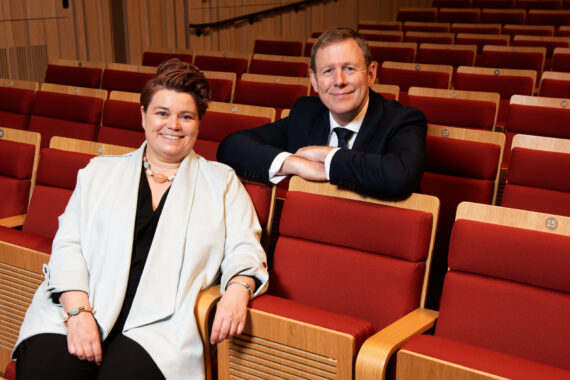
At Chetham’s School of Music, we’ve developed a leadership model that reflects exactly this challenge. Our Joint Principals, Nicola Smith and Tom Redmond, bring different experiences and expertise to the role, but a shared belief that creativity, academic achievement and personal development are equally important.
A leadership model built for a specialist environment
Specialist schools sit at the intersection of two demanding worlds. Students at Chetham’s spend their days balancing intensive musical training with a full academic programme, requiring a leadership structure that understands and values both.
Nicola brings more than two decades of experience in the maintained education sector, leading performing arts provision and whole-school operations. Tom’s background is rooted in the professional music industry, including senior roles with the Hallé and performances with internationally renowned orchestras such as the London Symphony Orchestra.
Together, their partnership ensures that neither music or academics is treated as secondary. Having a School Head and Music Director operating at the same leadership level sends a clear message to students, staff and families: artistic excellence and academic rigour are not competing priorities. They are equally important here.
The power of shared expertise
One of the great strengths of specialist education is that students are surrounded by people who understand their ambitions.
Whether it’s navigating the pressures of auditions, preparing for a major performance, or balancing practice with exams, students benefit from leaders who understand the realities of a musician’s journey. This depth of understanding also helps attract exceptional staff. World-class instrumental tutors want to work in an environment where artistic excellence is genuinely valued, while outstanding academic teachers are drawn to a culture that champions high achievement across every area of school life.
When leadership reflects the specialist nature of the institution, it creates credibility, trust and a stronger sense of shared purpose.
Balancing vocation and curriculum
Perhaps the greatest challenge for any specialist school is managing the tension between vocational training and academic study.
At Chetham’s, students typically spend around three hours each day immersed in music alongside four hours of academic lessons. Making that balance work requires constant collaboration.
By modelling collaborative leadership at the top of the organisation, we encourage academic staff and music tutors to work in partnership rather than in silos. The results speak for themselves. Students consistently achieve exceptional academic outcomes, while also developing the analytical thinking, creativity and resilience that music nurtures so effectively. Our alumni go on to successful careers not only as musicians, but also as scientists, journalists, teachers, politicians and entrepreneurs.
Keeping wellbeing at the centre
High achievement brings pressure, and specialist education is no exception.
For young musicians, feedback is constant. Performances, assessments and auditions can be both rewarding and emotionally demanding. That’s why wellbeing must be treated as a strategic priority rather than an afterthought.
At Chetham’s, we view health through a musical, physical and emotional lens. Alongside expert pastoral care, students have access to dedicated facilities, specialist physical support for instrumentalists and residential care from professional house parents. Just as importantly, they see collaboration and mutual respect modelled by the adults around them. Leadership sets the tone for culture, and culture shapes student experience.
A lesson beyond the classroom
Ultimately, collaborative leadership is about demonstrating that great things happen when people bring different strengths together.
That lesson extends beyond school life. Through partnerships with organisations such as the BBC Philharmonic and through performances in care homes, schools and community spaces, our students see firsthand the impact that collaboration can have on society.
Music is inherently collaborative and leadership should be too. In specialist education, where students are preparing not only for exams but for meaningful and creative lives, that approach can make all the difference.